
What is hydronics?
The simple rules of modern heating systems
Hydronics vs good hydronic practice
Hydronics is simply the movement of water and energy (heat) around a closed network of pipe and emitters.
Good hydronic practice is creating the right conditions for water and heat to move efficiently around a system through correct pipe/emitter sizing, pump and control selection and balancing. This is the heating engineer's craft.
Efficiency isn't guaranteed
Condensing boilers and heat pumps only achieve their advertised efficiencies when the heating system creates the right conditions for them to operate.
Without good hydronic practice, even the best boiler or heat pump will fall well short of its potential.
Heating systems follow rules
The good news is heating systems follow a small number of rules.
Understand those rules and you'll understand why some systems perform brilliantly while others never reach their potential.
The three rules of hydronics
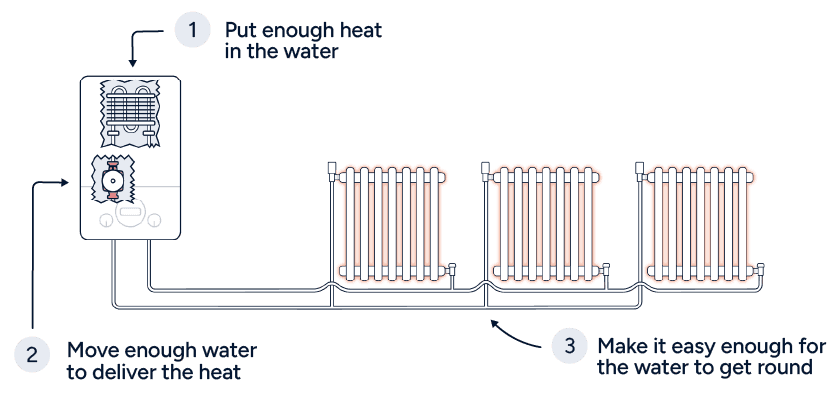
To create the right conditions for condensing boilers and heat pumps, there are three fundamental rules you need to follow:

Get one of them wrong, performance suffers. Everything comes back to getting these three rules right.
One skillset, two technologies
Whether you're fitting a heat pump, sizing a new system or troubleshooting poor performance, it's the same rules.
Learn the rules once, work on all systems.
Understanding the rules is one thing, applying them is another
Knowing how heating systems behave doesn't automatically tell you what to do on a real job.
That's why we developed 10 Step Hydronics.
A practical process for working on any system in the order real jobs happen, from survey to commissioning.
Each step answers a question, each answer informs the next decision.
So you're never guessing what to do next, making the job more predictable.
The regs have caught up
For years, system knowledge was optional.
Today, low-temperature system design is built into the regulations for boilers and heat pumps.
Qualifications and standards are catching up with what the best engineers have understood for years: system configuration governs heat source performance.
Get ahead, because it's happening anyway
Most heating engineers don't learn hydronics because somebody tells them they have to.
They learn it because it improves how they work in every way.
- From guessing to understanding
- From chasing symptoms to finding the real cause
- From hoping it'll work to knowing it will
When you understand how heating systems behave, you stop relying on guesswork and start making decisions with confidence.
The Warmur Method
Built around the 10 Steps.
Our 10 Step Hydronics framework follows the same order you'd tackle a real job and shows how each design decision affects system performance.
Survey
Understand the job.
Design
Understand the system.
Install
Put it to work.
Unlock your inner hydronics pro.
Whether you’re new to hydronics, looking to get qualified or want the complete package, we have training options to level up your skills.
I couldn’t recommend this course highly enough… it will make you stand out from your competitors.Phil M, Heating Engineer - Bucks
Rated 4.9/5 stars
by over 500 engineers